Bukhara: A Rug, a Swim, and a City Time Forgot
Bukhara, Uzbekistan - June 2026
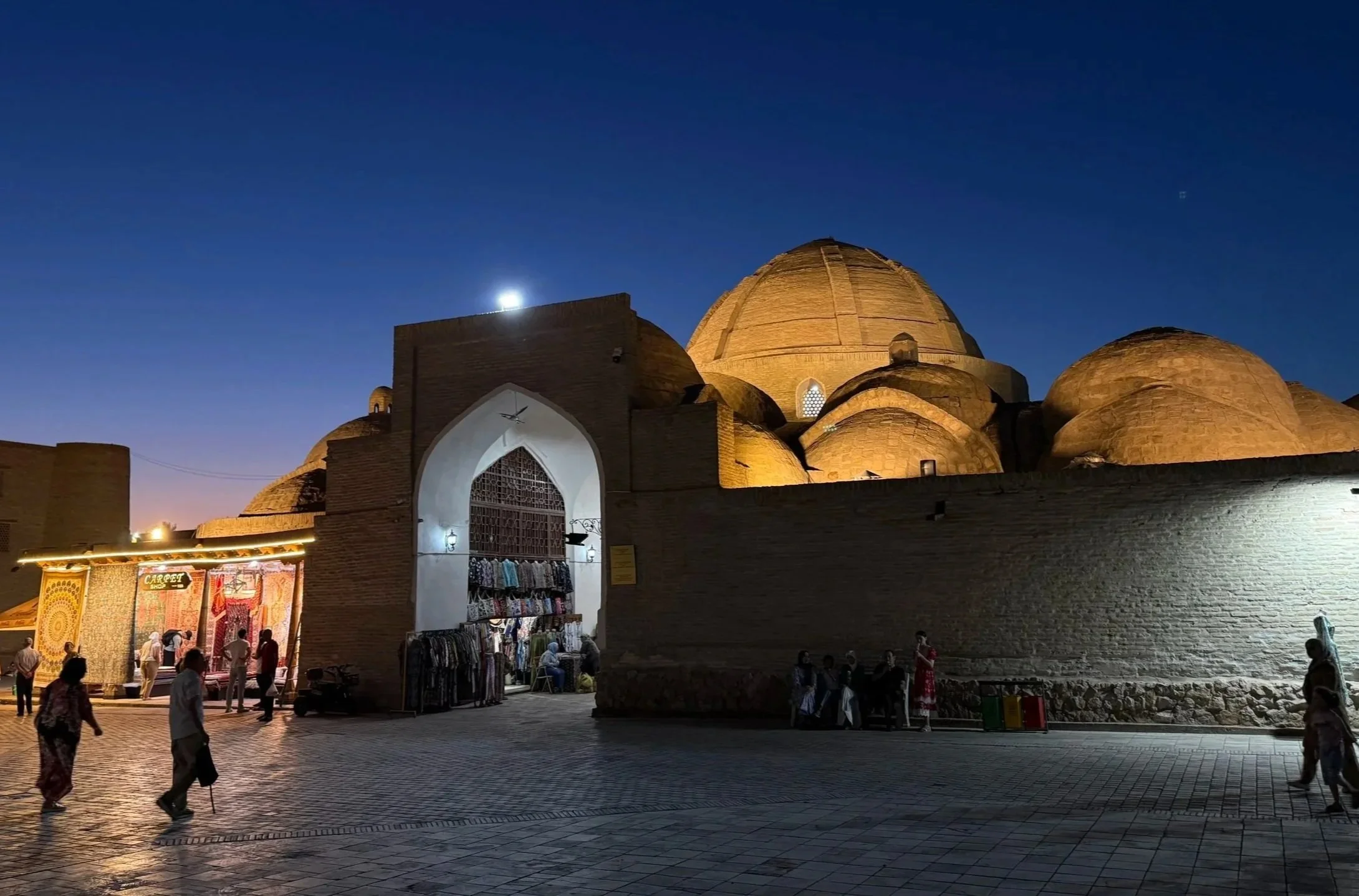
I had been to Bukhara a couple of years ago on my first visit to the region and was a little underwhelmed. Maybe I was tired, or maybe the August heat wore me down, but this time my impression of the city was completely rehabilitated, so much so that I think it might be my favorite in Uzbekistan now. The old town center is well preserved and large enough to explore for a couple of days, with covered trading domes that still house working vendors and alleyways connecting the commercial centers to the public squares.
No single site in Bukhara is as impressive on its own as the Registan in Samarkand, but the town itself is the real attraction, and walking through it you can actually imagine what Uzbekistan looked like before the Soviet era arrived. For centuries before any of that, Bukhara was the closest thing the Islamic world had to a capital of scholarship and trade, and its schools were the most prestigious ones to graduate from, known across Eurasia. Later it became a protectorate of the Russian Empire, and later still it was overrun outright by the Red Army, so the layers of history here run deep.
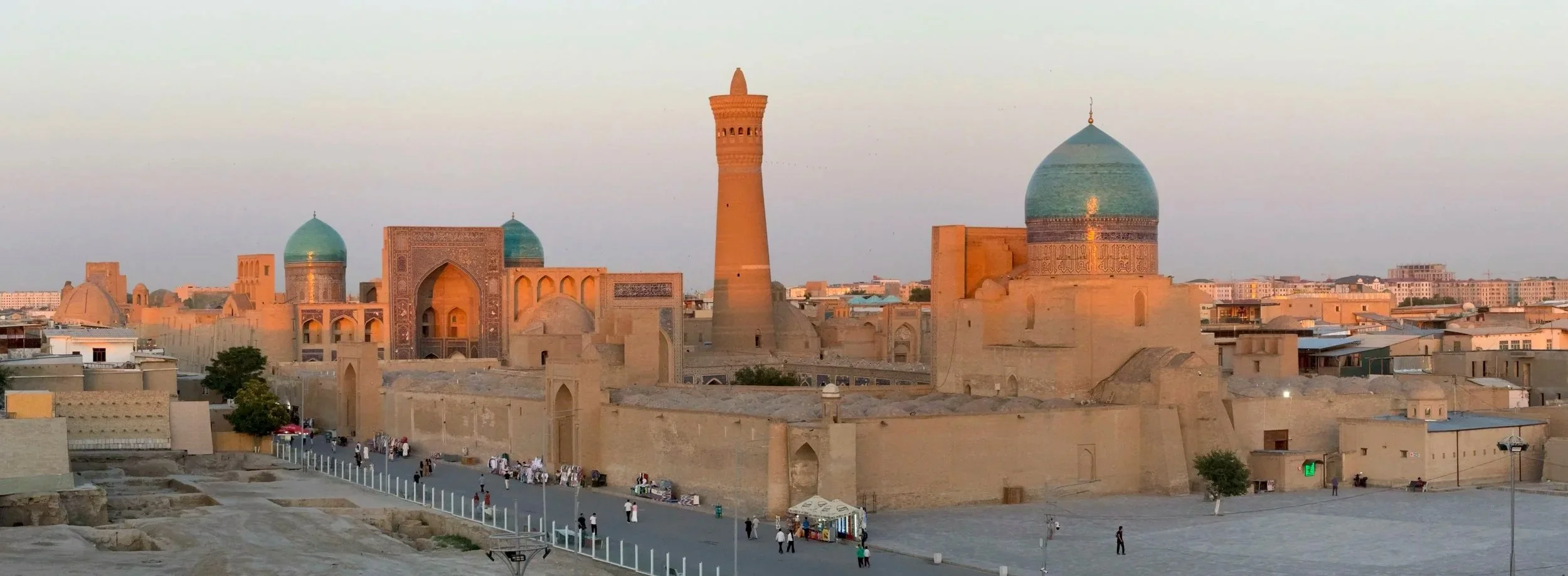
Bukhara’s old town and the Kalon Minaret at Sunset
I spent the first day relaxing and walking the old town again, remembering where I had been years before, and it felt like a much-needed rest stop on my trip. I ate at Magic House, a cafe serving local dishes, and browsed through several shops. I have wanted a Bukharian carpet since my last visit, since the city is famous for the craft, so I spent some time in the rug shops as well. I also stopped by the Kalon Minaret, the defining feature of Bukhara's skyline and once the place from which thieves were thrown during the time of the Bukhara Emir. It is said that Genghis Khan was so impressed by the minaret that he ordered it spared from an otherwise scorched-earth campaign.
The Ark of Bukhara, a walled complex that once held the Emir's palace, is also worth seeing, even though the history there is a grim one. The square in front of it is where two British officers, Stoddart and Connolly, were executed as spies in the 1800s, caught up in the broader rivalry between the British and Russian empires for influence in Central Asia that came to be known as the Great Game. Nearby is the Zindan jail, which is where the two men were actually held captive for months before their execution.
Left: One of Bukhara’s silk road trading domes
The best part of my time in Bukhara was not a monument, though. While shopping for a rug, I ended up talking with Aziz, a local entrepreneur who owns one of the shops and is building a small hotel nearby. Getting to know him was a real window into Uzbek culture and how the country is changing day to day. I heard about the changes instituted since the first president’s reign ended, opening up the country and promoting tourism. Aziz took me to a lake outside of town for a swim, and I got to meet his mother, who taught for years in the United States, along with his brother, his wife, and his kids.
By the end of the third day, I had bought a small handmade wool carpet, a watercolor, a few Soviet relics, and some gifts to bring home, more than I meant to buy and less than I wanted to. I spent most of the rest of the stay walking the town and sitting in cafes, which felt like a kind of time machine back to Bukhara's golden age. On the third morning I got on one of Uzbekistan's new high-speed trains and rode it through the desert to Khiva.
If you go…
In the hotter months, wake up early and rest during the daily heat; the city comes alive at night
Get in by train from Samarkand or Tashkent; Uzbekistan's high-speed rail (equipped with WiFi and snacks) makes this easy, and it's a nicer ride than flying
2–3 days is right; enough to see the old town properly without running out of things to do
Rug shopping is worth doing here specifically, as Bukhara more than any other Uzbek city has a history with the craft
If you do shop for a rug, be wary of carpets from Iran and Afghanistan advertised as local and always negotiate the price
Magic House is a solid, unfussy place to eat local dishes and find vegetarian options
If you get a good rapport with locals, don't rush off; some of the best hours of a trip like this come from the new people met along the way
